← News & advice

Vehicle development · Ford Ranger

Ford Ranger.
Developed as a complete package.

ECU and automatic calibration, drivability solutions, purpose-developed exhaust systems and downpipes across one of Southern Africa’s most important bakkie ranges.

Ford Ranger 2.0 Bi-Turbo Stage 1 tuning by Boostech

The developed range

From workhorse to Raptor

The breadth of the Ranger range is exactly why experience matters. These applications share a badge, but not one engine, one turbo system or one calibration strategy.

01ECU
calibration
02Automatic
calibration
03Developed
downpipes
04Complete
exhaust systems
Share this guide

The Ford Ranger is not one vehicle with one tuning file. The range spans different generations, engine families, turbo layouts, transmissions and performance levels—from the hard-working 2.0 single-turbo to the Bi-Turbo Wildtrak, 2.3T petrol, 3.0 V6 and the range-topping Raptor.

Boostech’s development reflects those differences. We have worked across the Ranger range to produce vehicle-specific ECU calibrations, automatic-transmission solutions and supporting exhaust hardware. The objective is usable torque, better response and a powertrain that works as a complete system.

Development across the Ranger range

Each Ranger responds differently. A 2.0 single-turbo used daily or for commercial work needs a different torque strategy from a 2.0 Bi-Turbo Wildtrak, while the 3.0 V6 Ranger and Raptor require their own careful approach to boost, torque control, fuelling and gearbox coordination.

Our Stage 1 calibrations focus on the area drivers use most: low- and mid-range torque, throttle response, overtaking performance and more decisive delivery under load. Where an automatic calibration is available and suitable, it is coordinated with the engine software rather than treating the gearbox as an afterthought.

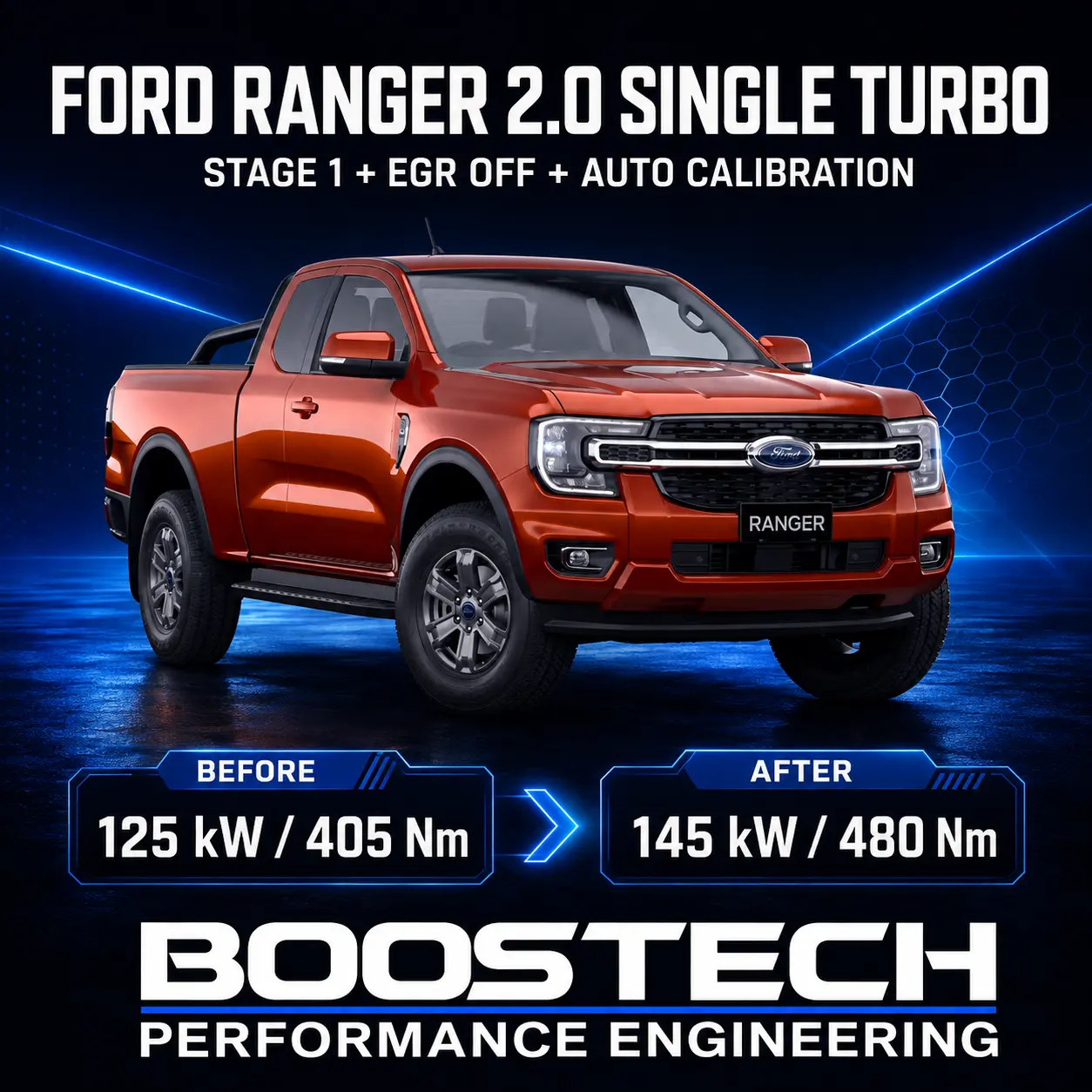
Ranger 2.0 single-turbo125 kW · 405 Nm → 145 kW · 480 NmNext-generation application
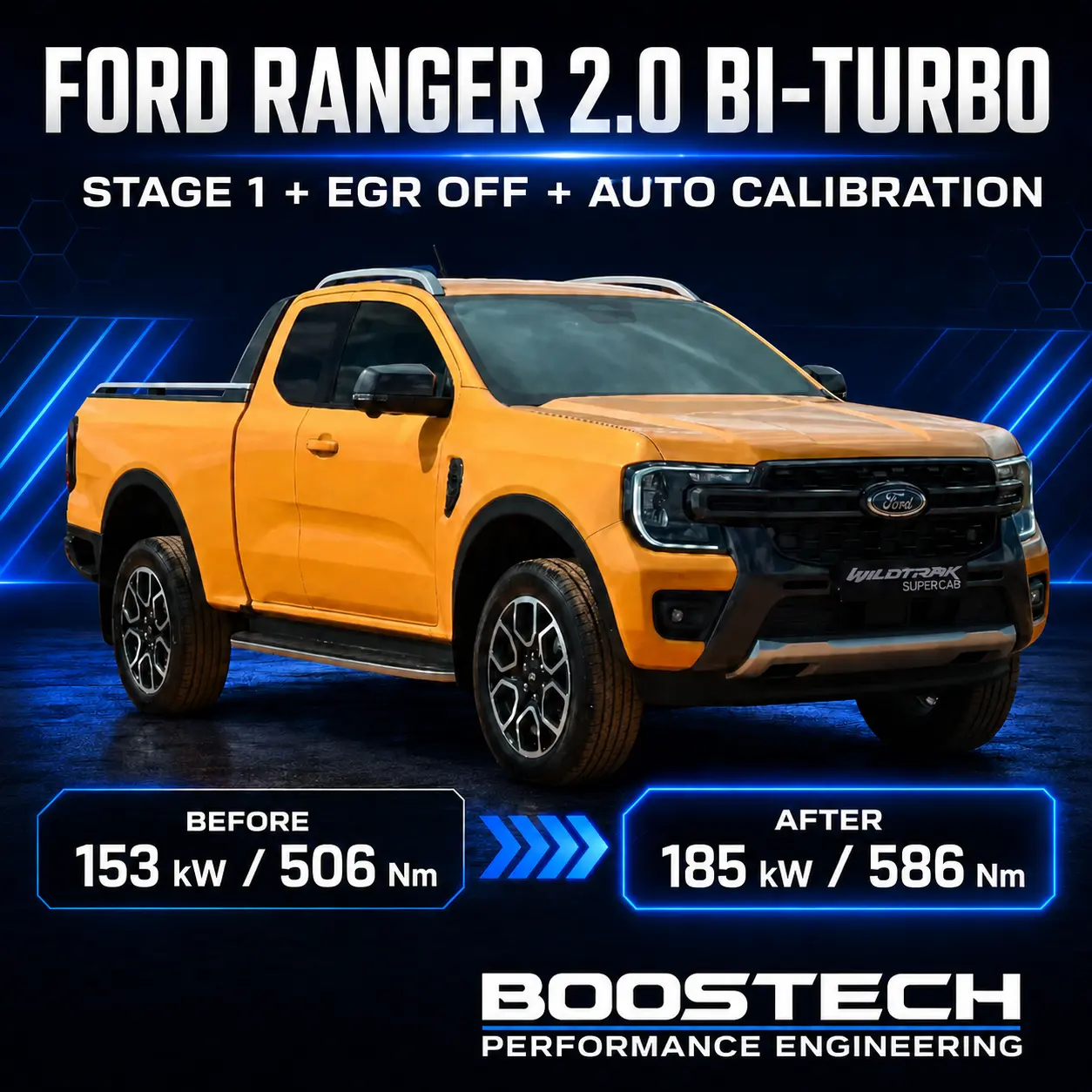
Ranger 2.0 Bi-Turbo153 kW · 506 Nm → 185 kW · 586 NmStage 1 development
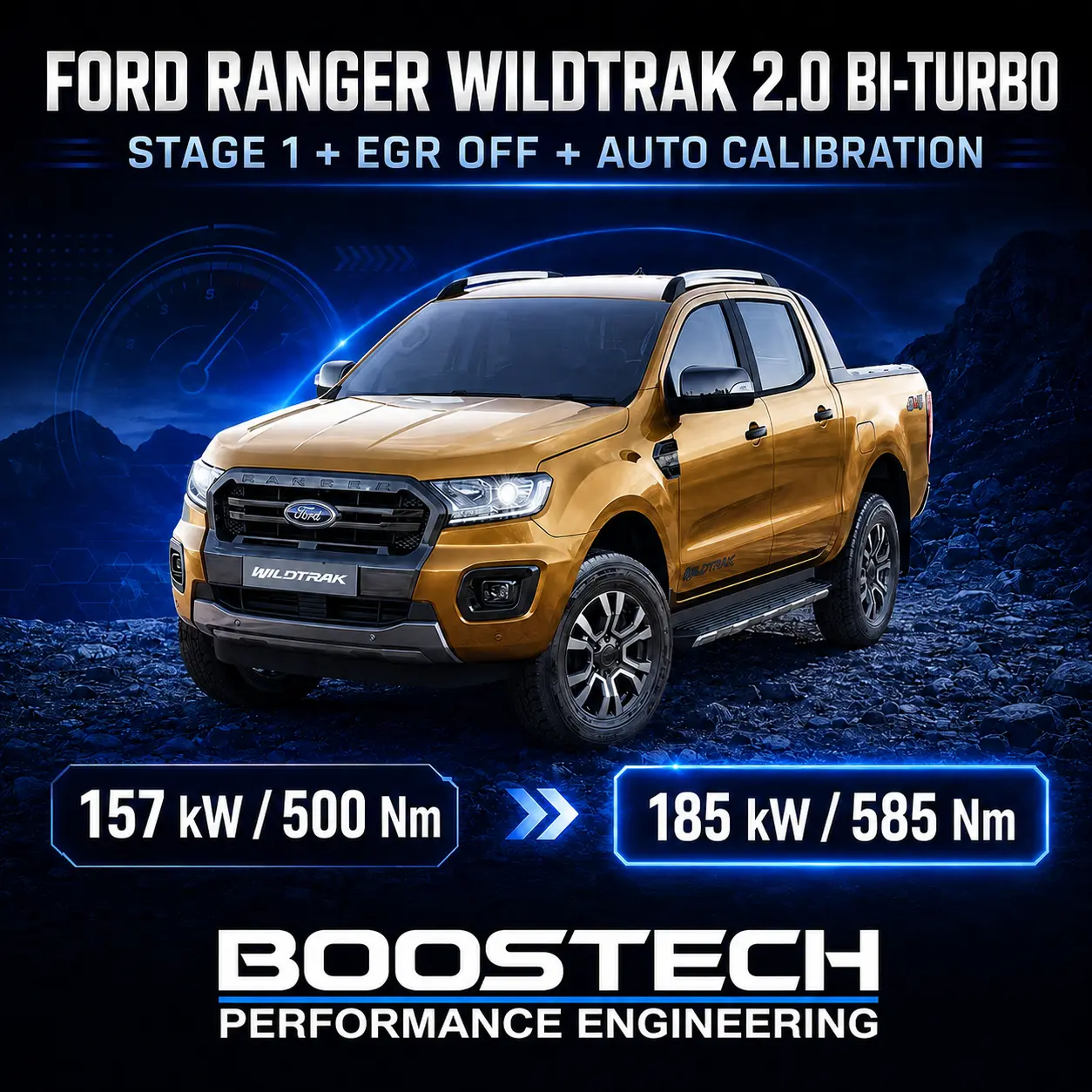
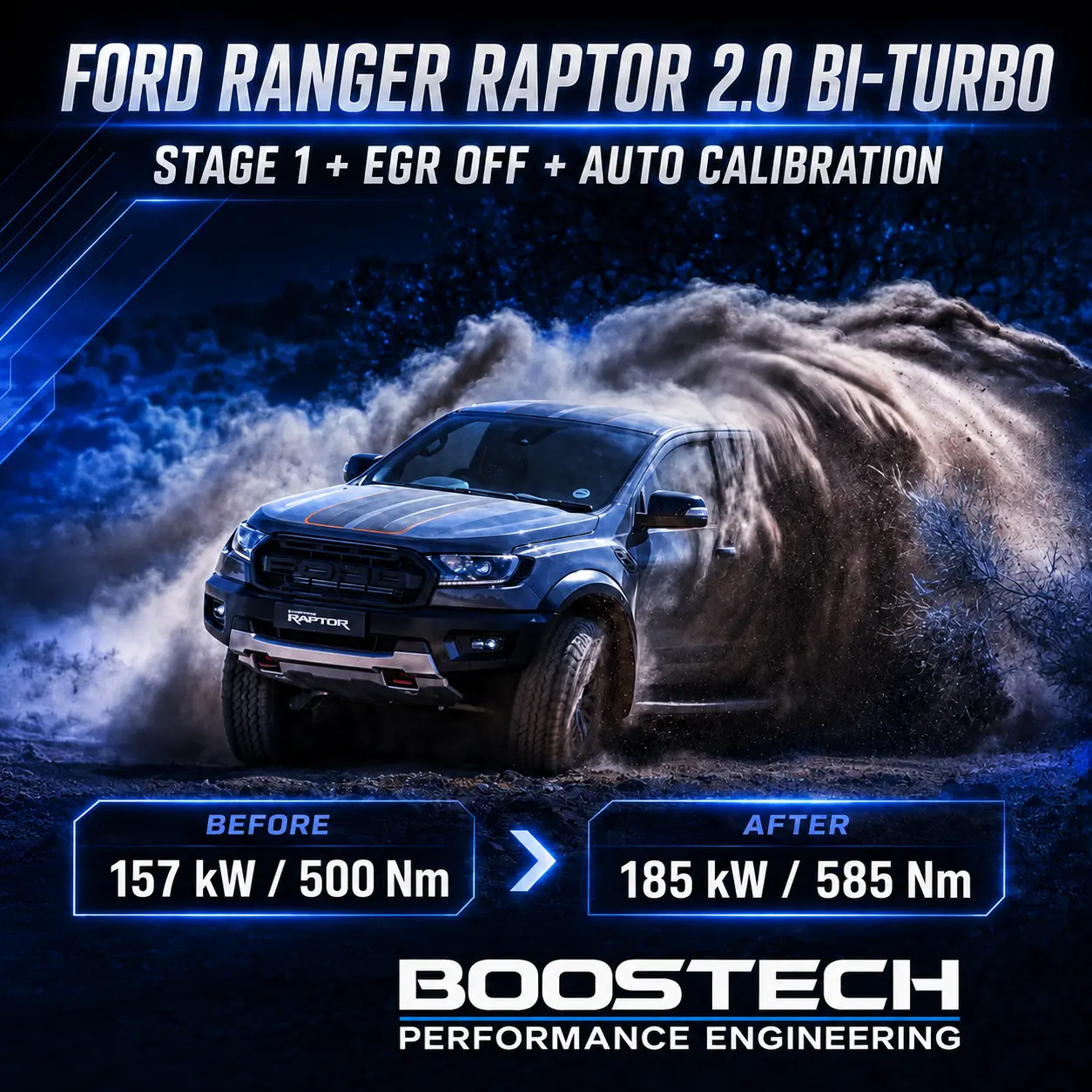
Wildtrak / Raptor 2.0 Bi-Turbo157 kW · 500 Nm → 185 kW · 585 NmEngine and automatic calibration
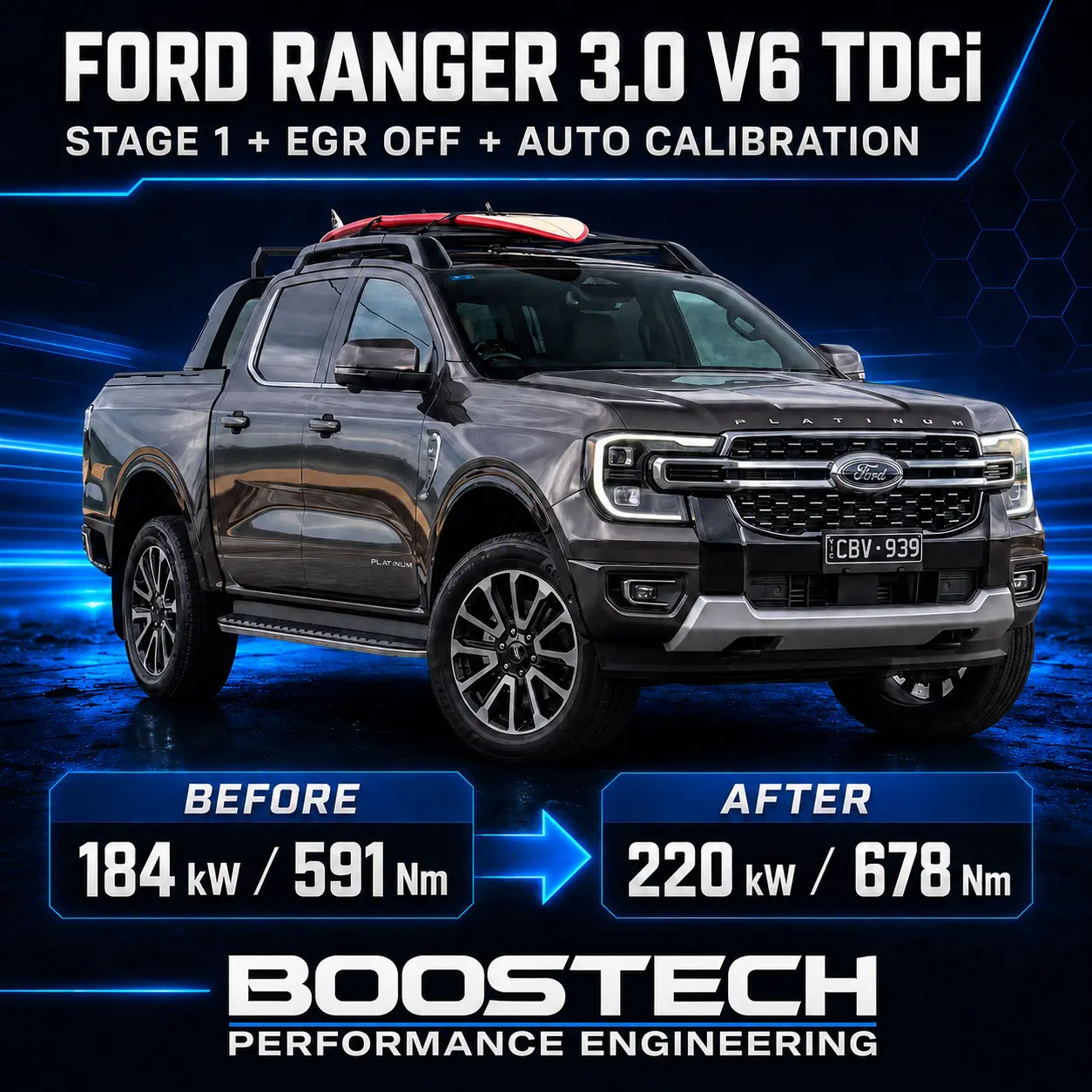
Ranger 3.0 V6 TDCi184 kW · 591 Nm → 220 kW · 678 NmStage 1 development
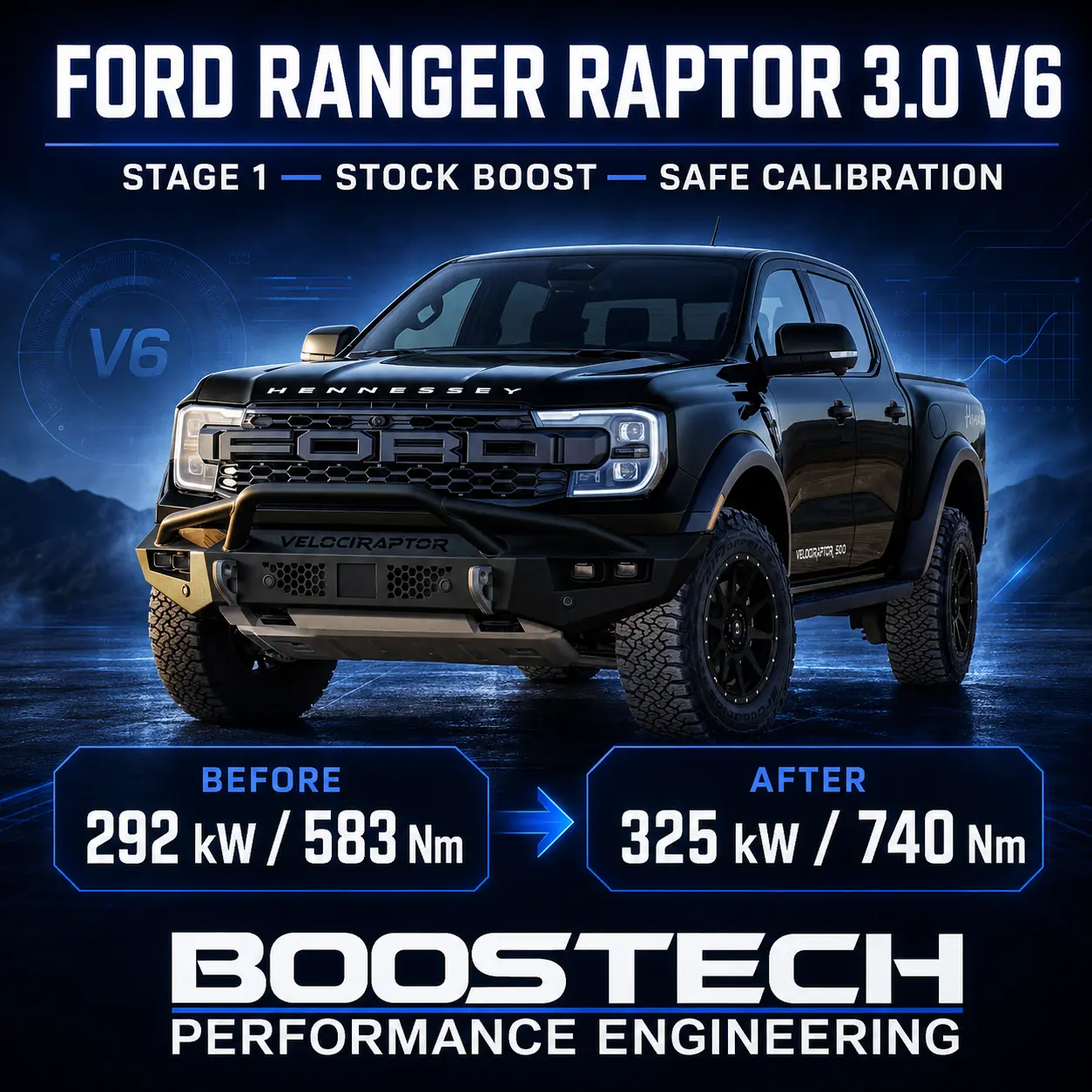
Ranger Raptor 3.0 V6292 kW · 583 Nm → 325 kW · 740 NmSafe calibration on stock boost
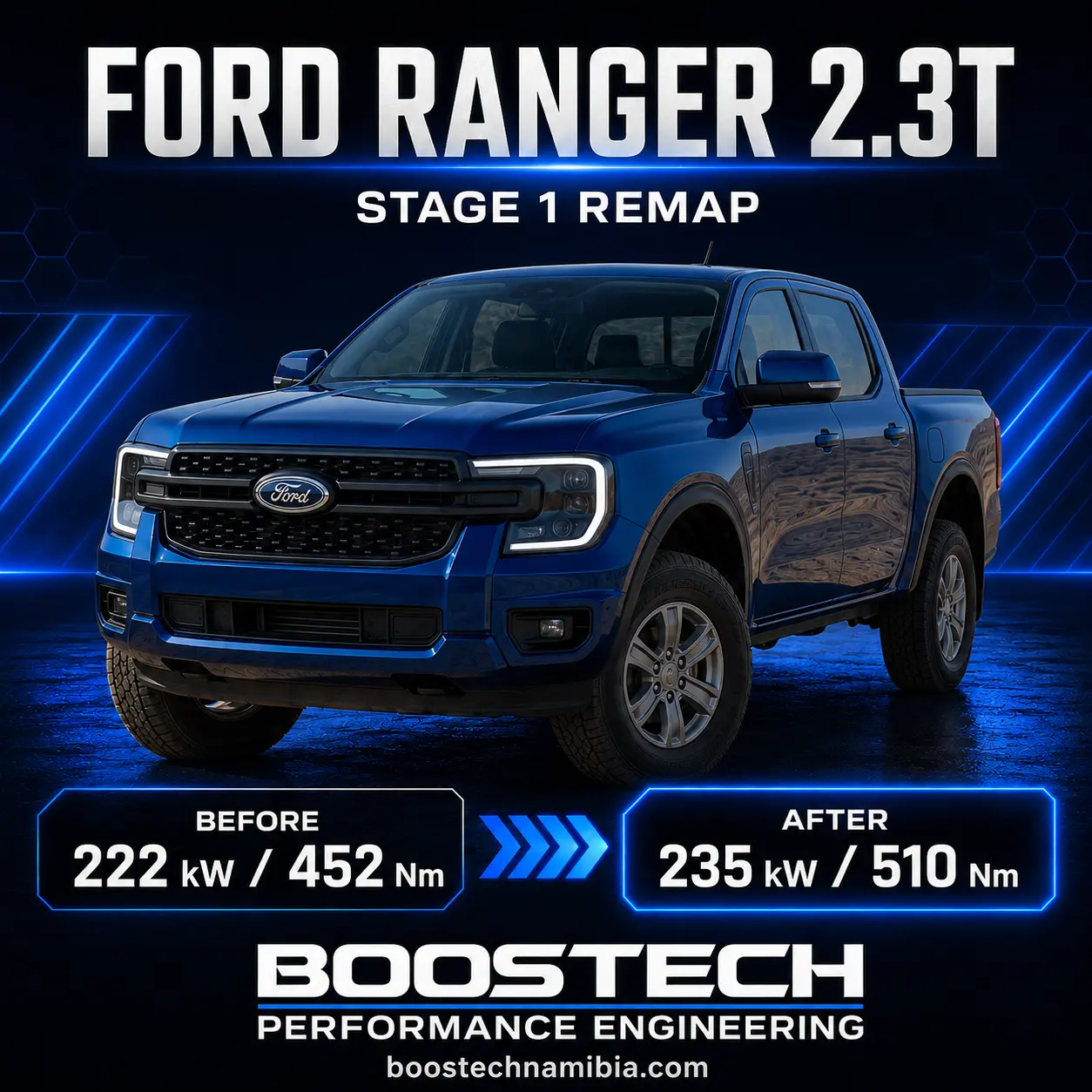
Ranger 2.3T petrol222 kW · 452 Nm → 235 kW · 510 NmStage 1 remap
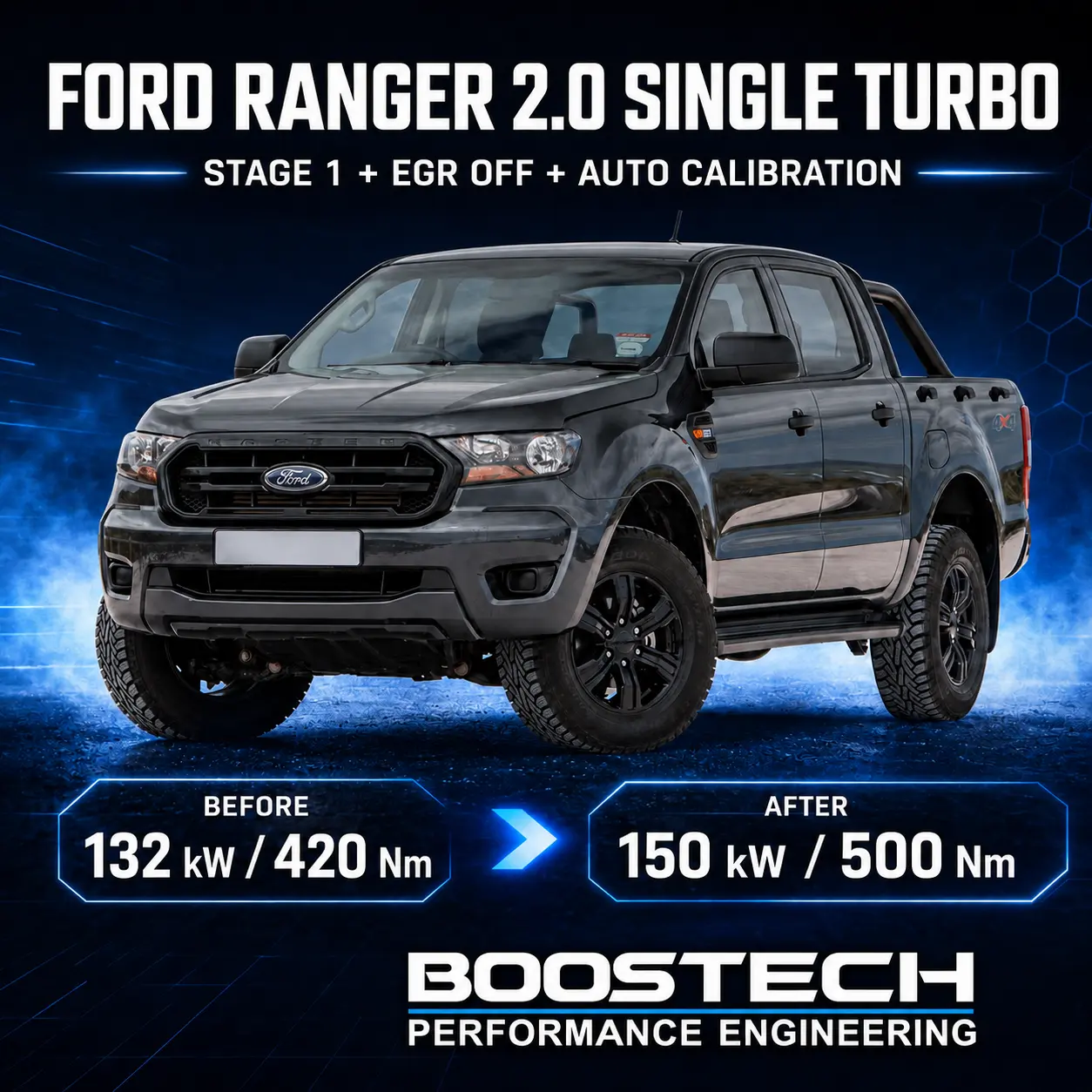
Earlier Ranger 2.0 single-turbo132 kW · 420 Nm → 150 kW · 500 NmStage 1 development

These are representative development figures, not a blanket promise for every vehicle. Exact output depends on the model year, ECU and software version, fuel, transmission, hardware and mechanical condition of the individual Ranger.

The important point

A Ford Ranger should feel stronger because the engine, turbo system, torque model and gearbox are working together—not because one number has been pushed as high as possible.

More than peak power

The way torque arrives matters as much as the maximum figure. A well-developed Ranger calibration should make towing easier, reduce unnecessary gearbox hunting, improve overtaking response and give the driver finer control in sand, on gravel and in everyday traffic.

  • Stronger, cleaner low- and mid-range torque
  • Sharper response without abrupt throttle behaviour
  • Engine and automatic calibration coordinated where available
  • Speed-limiter adjustment for selected applications
  • Automatic stop/start deactivation for supported models
  • EGR-related solutions where appropriate and legally permitted
Developed hardware

Exhausts and downpipes designed for the Ranger

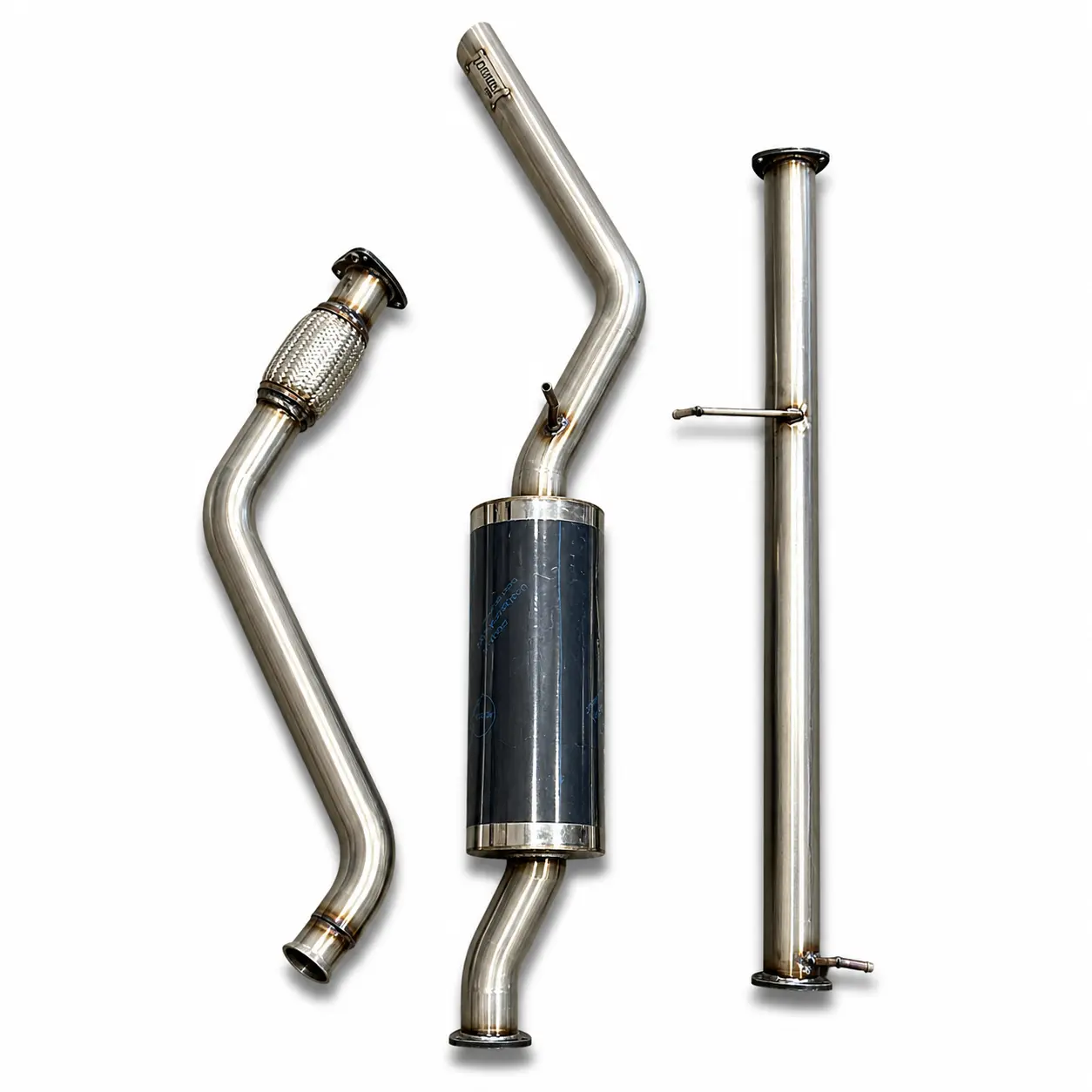
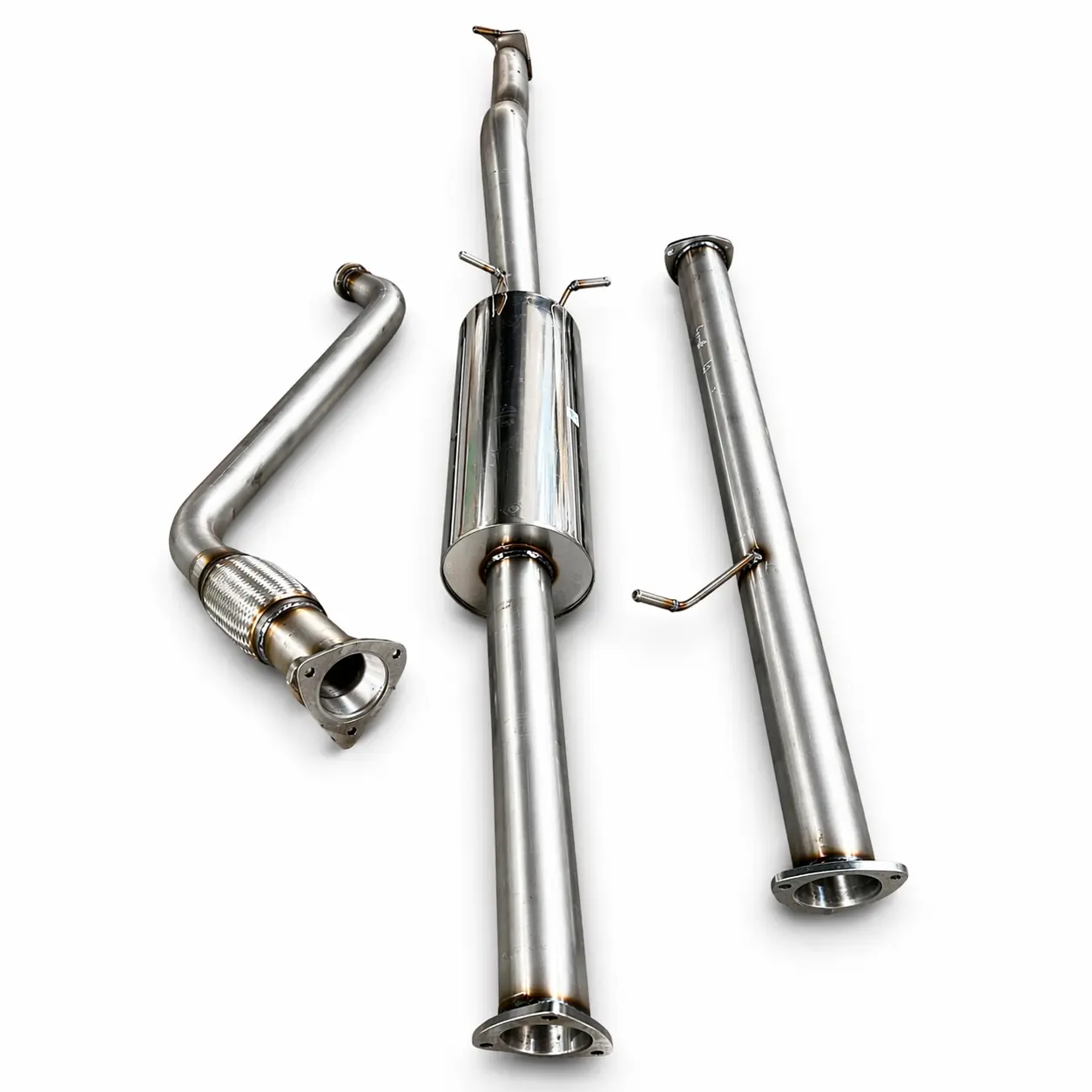
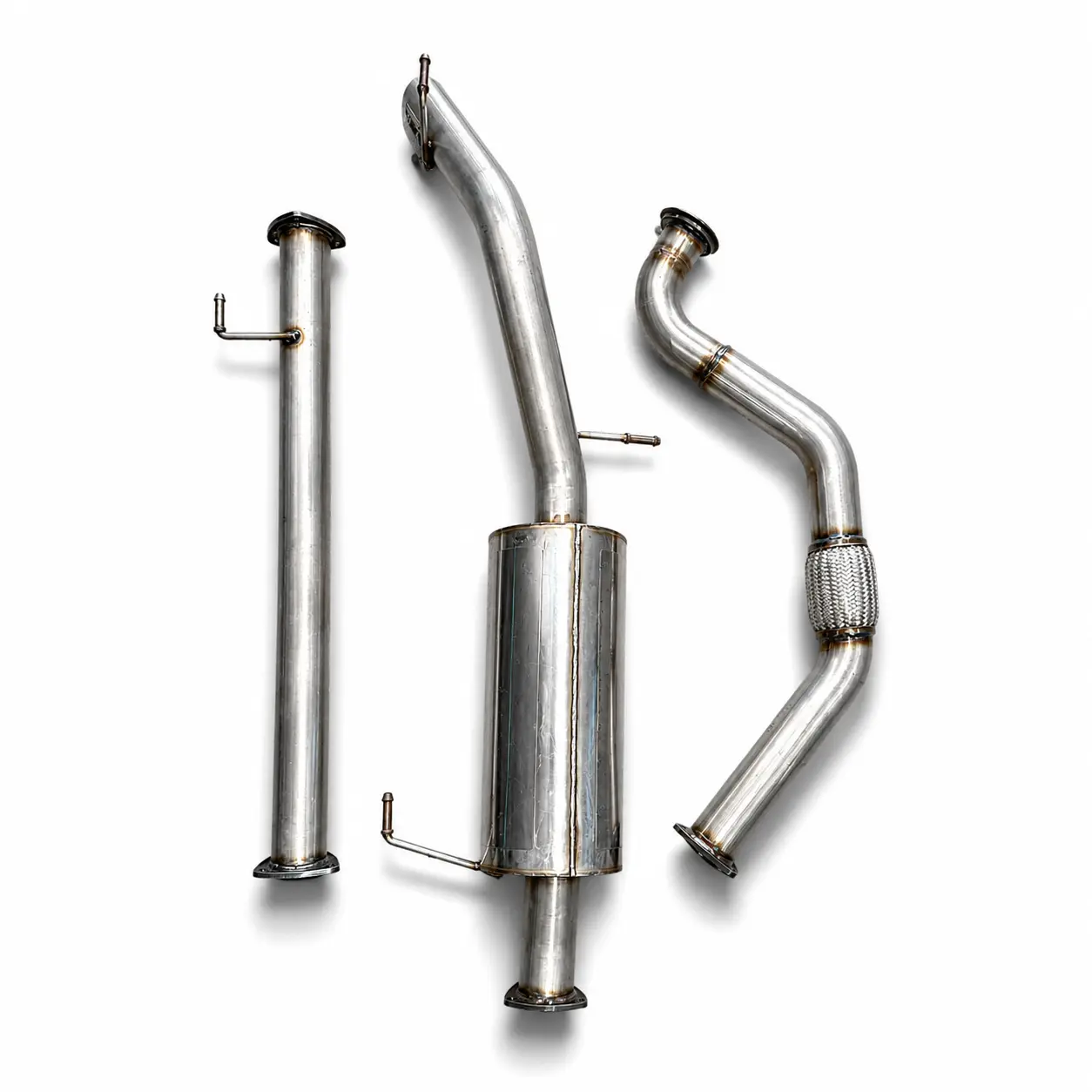
Software works best when the supporting hardware is properly designed. We have developed Ranger downpipes and complete exhaust systems around the actual vehicle layout—not simply added a universal length of pipe. Fitment, clearance, flange alignment, flex sections, hangers, silencer choice and flow all matter.

A freer-flowing system can reduce unnecessary restriction and support stronger response, but bigger is not automatically better. The system must suit the engine, turbo layout, intended power level and how the vehicle is used. A daily-driven Ranger, a towing vehicle and a performance-focused Raptor do not necessarily need the same hardware or sound level.

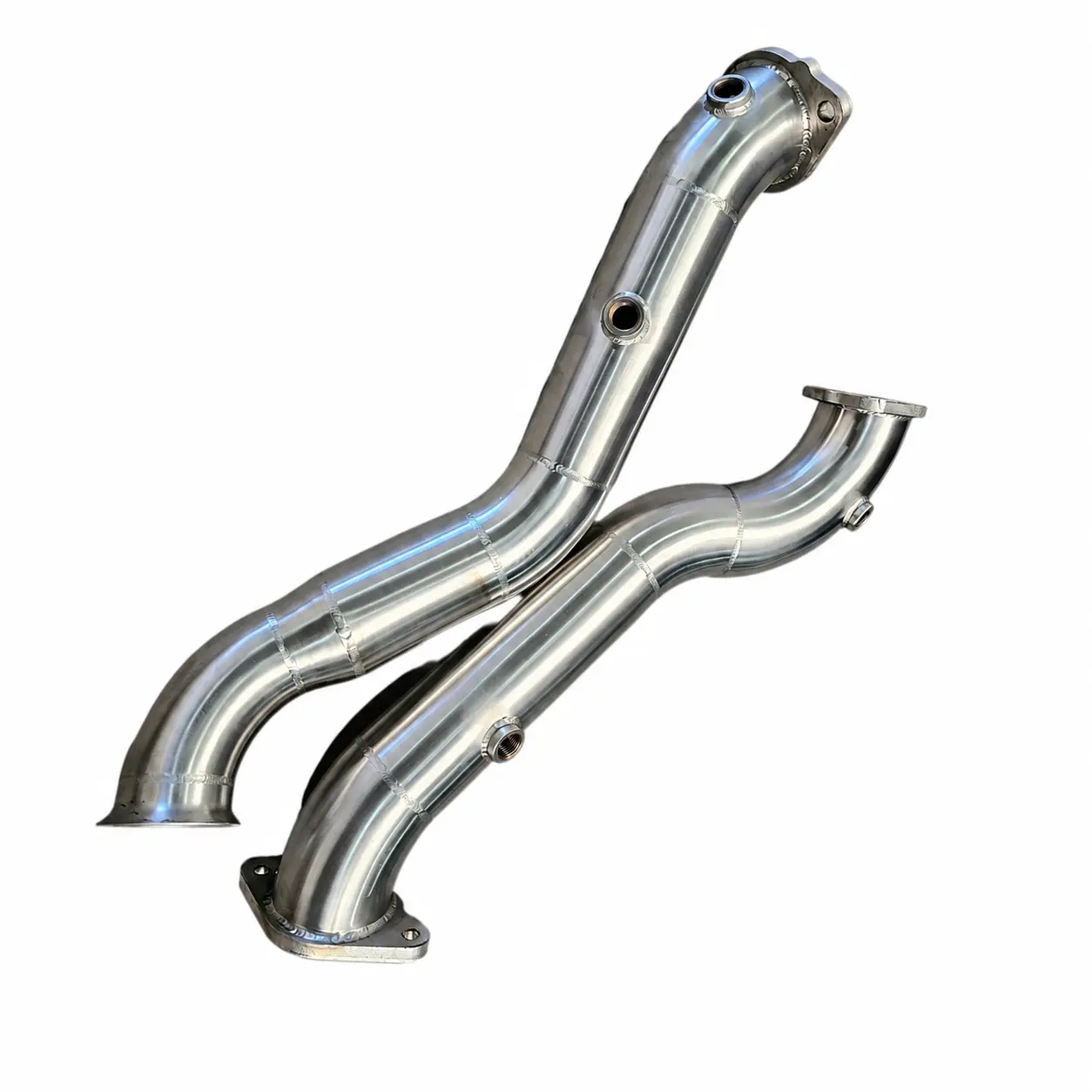
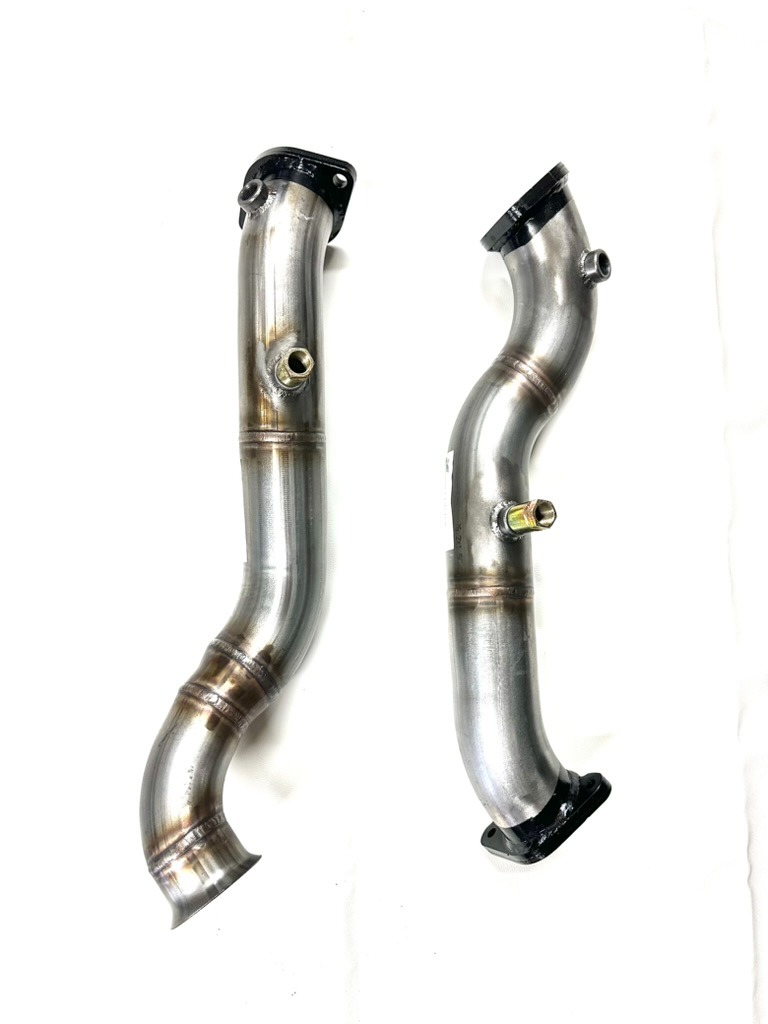
Our downpipe development includes applications for the 2.0-litre Ranger range as well as the 3.0 V6 platforms. Complete systems are available for selected models, with calibration matched to the hardware when a Stage 2 package is appropriate.

Material and construction vary by application. T304 stainless steel is used on selected systems only; we will confirm the exact specification for your Ranger before quoting.

Developed Ford Ranger exhaust system and downpipe
Complete Ranger system with purpose-made bends, flex section and silencer.
Ford Ranger performance exhaust system components
Vehicle-specific pipework, mounting points and silencer arrangement.
Ford Ranger developed exhaust and downpipe assembly
Supporting hardware developed as part of the complete package.
Pair of developed Ford Ranger 3.0 V6 downpipes
Purpose-developed downpipes for selected Ford 3.0 V6 applications.
Two Ford Ranger performance downpipes
Different Ranger platforms require different routing, flanges and sensor positions.

Built around your Ranger

Software and hardware.
Developed together.

Send us the year, model, engine, transmission and intended use of your Ranger. We will confirm the available calibration, realistic figures and the correct exhaust or downpipe options.

Request a Ranger assessmentExplore 1-Exhaust