A performance exhaust should not be judged only by pipe diameter or how loud it sounds. The best system is the one that manages gas flow correctly, fits the vehicle properly and supports the engine and turbocharger without introducing new problems.
The system matters as a whole
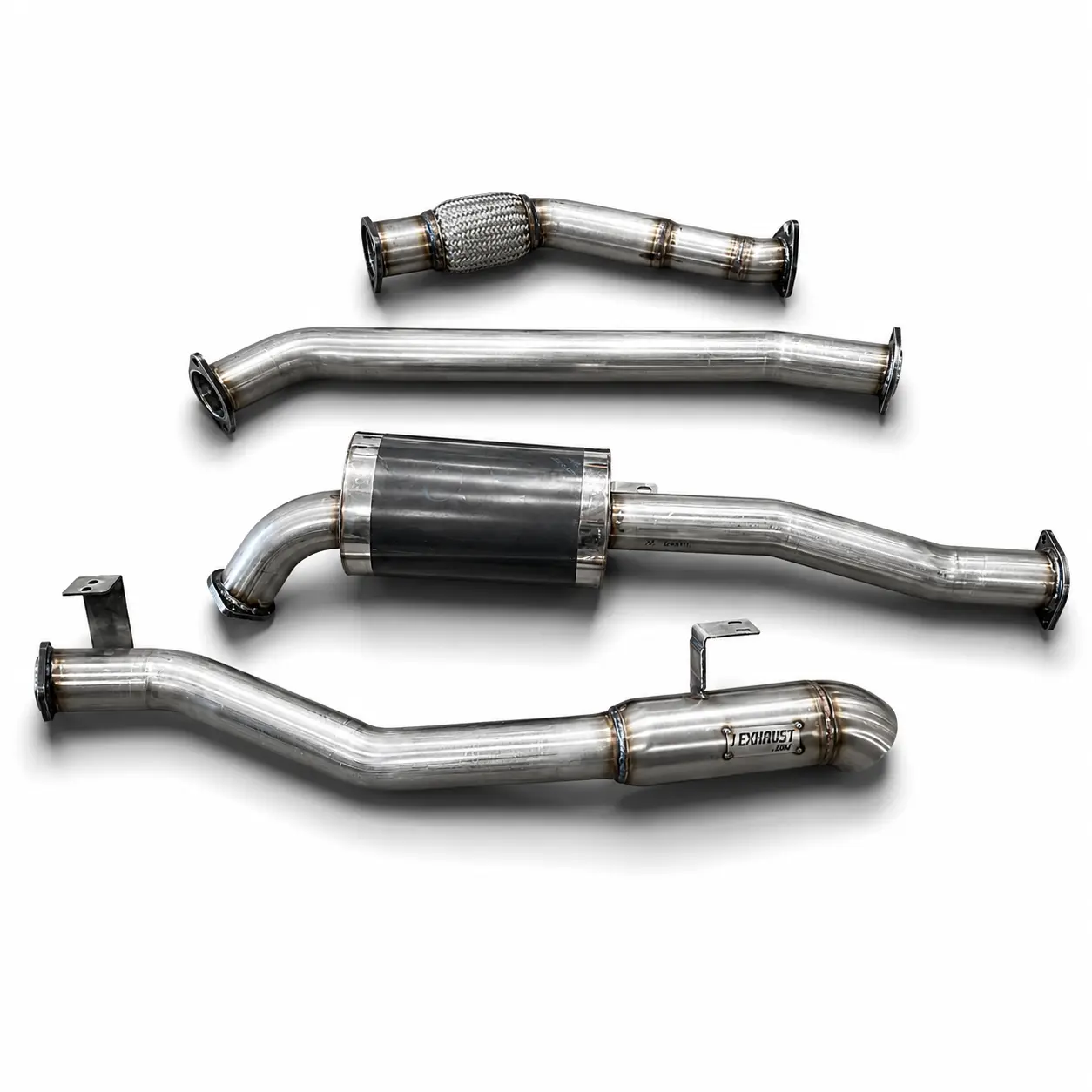
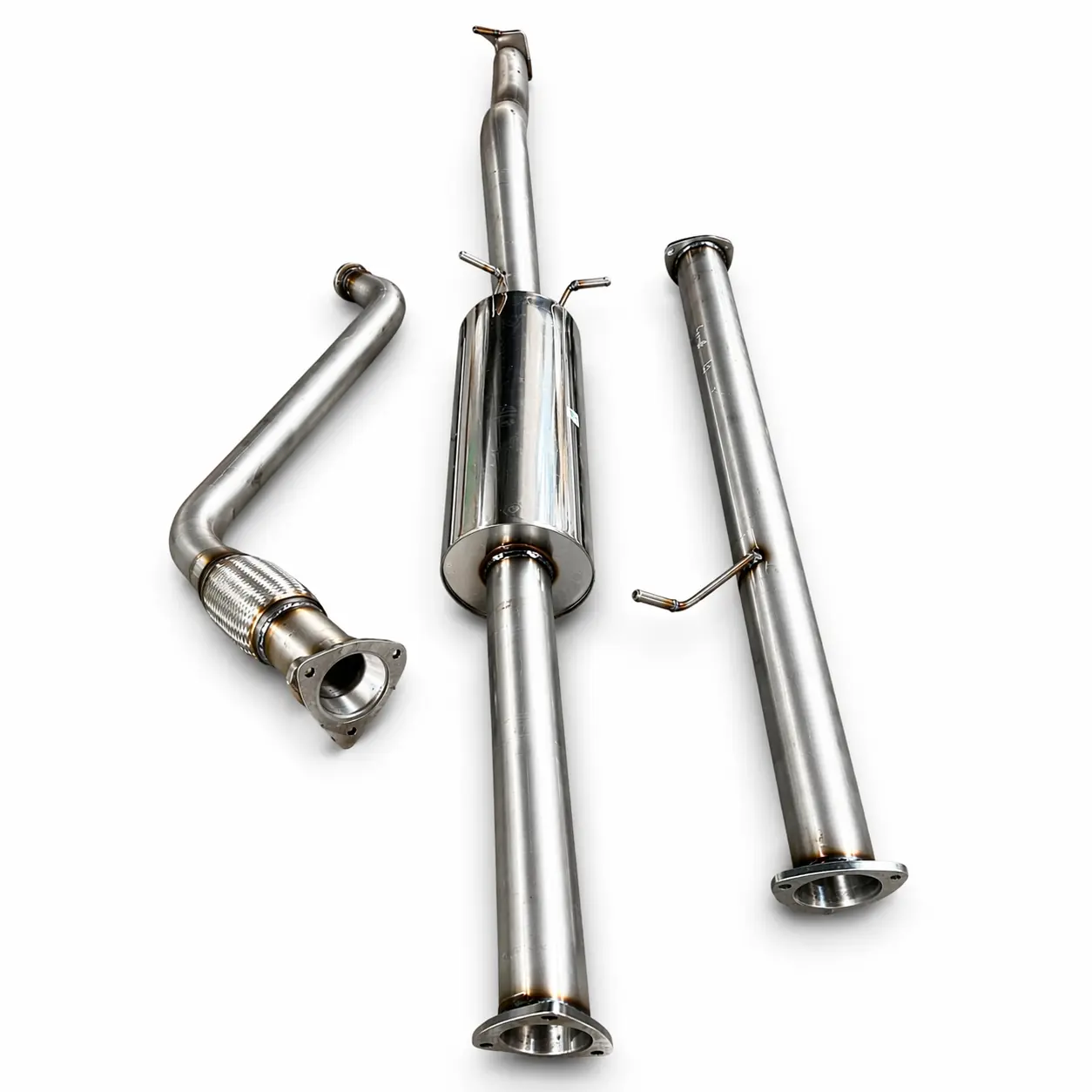
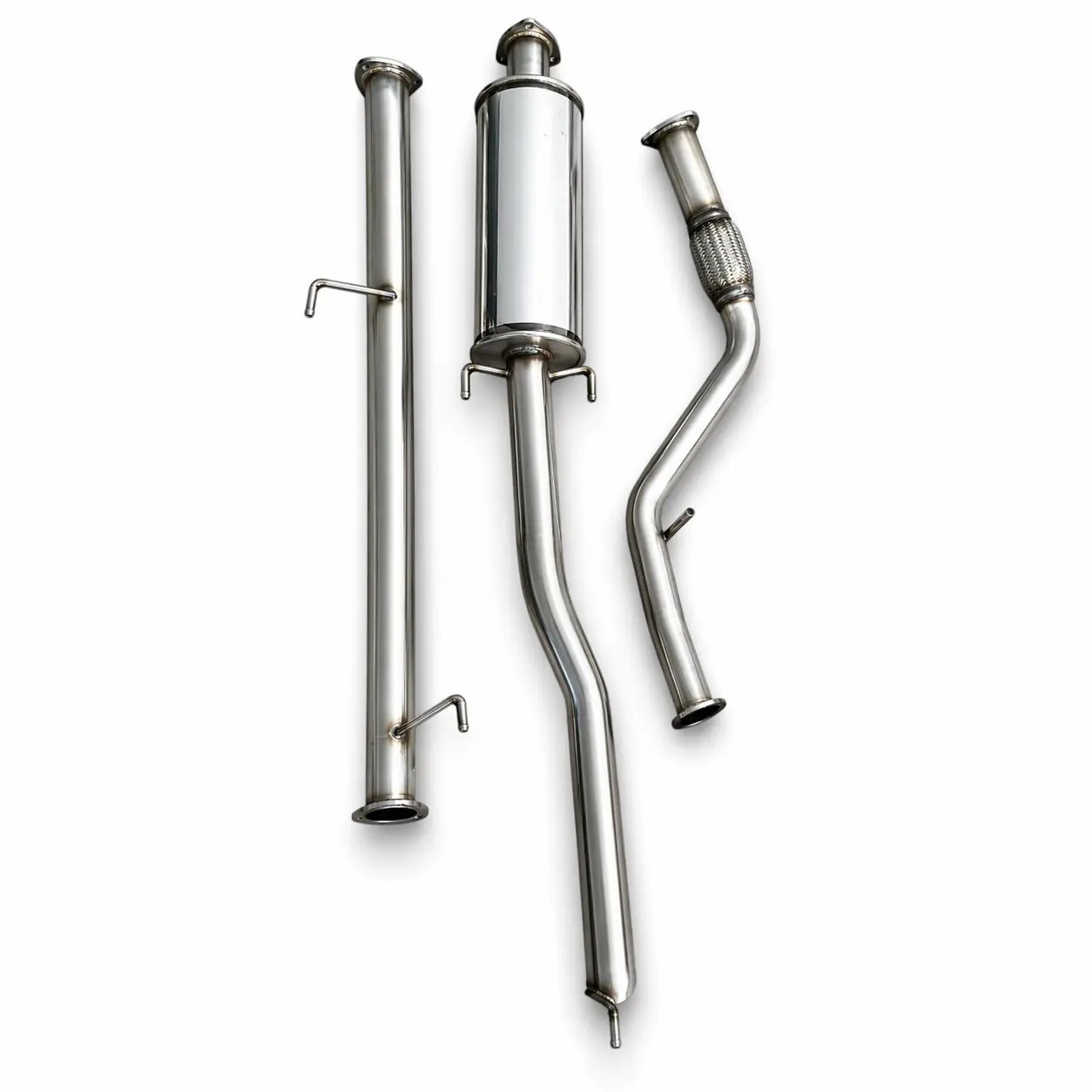
Exhaust flow is affected by every transition, bend, flange, joint, silencer and change in diameter. Making one section extremely large while ignoring the rest of the system can create turbulence, poor fitment, leaks, unwanted resonance or unstable boost behaviour. That is why 1-Exhaust systems are developed for specific vehicles rather than treated as universal lengths of pipe.
Pipe diameter is selected for the engine, turbocharger and intended performance level. Routing follows the available space beneath the vehicle while maintaining clearance from the body, drivetrain, heat-sensitive components and suspension movement. Mounting points are positioned to support the system correctly instead of forcing it into place during fitment.
The 1-Exhaust principleMore flow is valuable only when it remains controlled. A proper system improves breathing without sacrificing fitment, stability or everyday usability.
Downpipes engineered to prevent surging
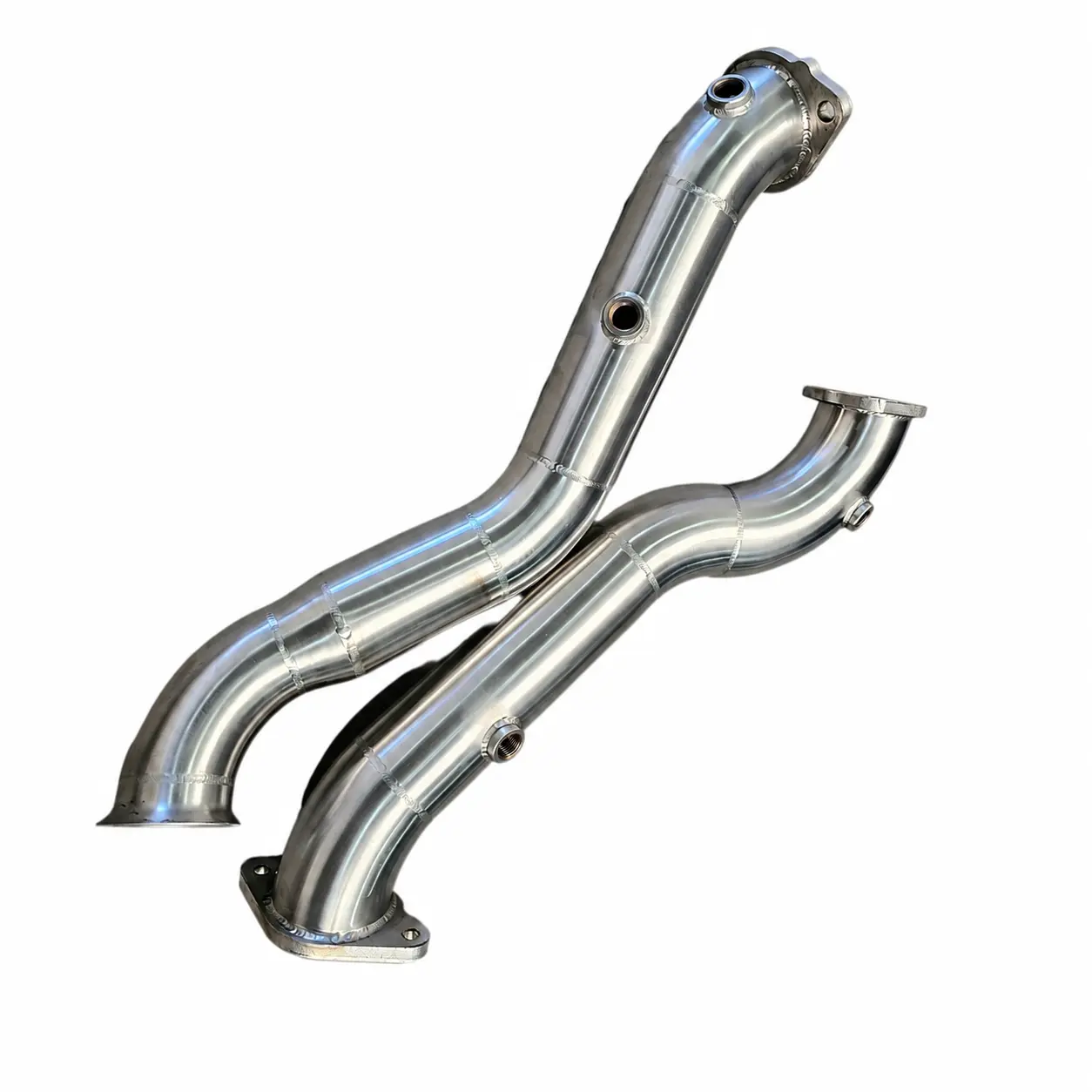
The downpipe is the first major section of exhaust after the turbocharger, and it has a disproportionate effect on how smoothly exhaust gas expands and leaves the turbine. It cannot be designed as a crude oversized tube with an abrupt transition at the turbo outlet.
Poorly designed high-flow downpipes can disturb pressure behaviour and boost control, producing oscillation that the driver experiences as surging. The 1-Exhaust approach controls the outlet diameter, expansion, transitions, bends and overall routing to promote stable flow. Correct sensor positions and properly formed connections allow the engine-management system to receive consistent information and control boost predictably.
In practical terms, the downpipe is engineered not only to reduce unnecessary restriction, but also to prevent surging. That is a crucial difference between a purpose-built performance component and a generic pipe fabricated only to fit between two points.
Materials and fabrication
Automotive-grade T304 stainless steel tubing and silencers are used on applicable 1-Exhaust performance systems for exceptional durability, corrosion resistance and long-term performance. But the quality goes far beyond the stainless steel itself: every bracket is precision laser-cut and every hanger is individually turned on a lathe, rather than relying on generic mass-produced components.
Together with clean TIG-welded joints and thick flanges designed to resist warping through repeated heating and cooling cycles, this attention to detail delivers exceptional fitment, strength and consistency—making 1-Exhaust quality a cut above almost anything else on the market.
- T304 stainless steel on applicable performance systems
- TIG-welded joints
- Every bracket precision laser-cut
- Every hanger individually turned on a lathe
- Thick flanges designed to resist warping
- Correct hanger, sensor and connection locations
- Vehicle-specific routing and direct bolt-on fitment
Why fitment quality matters
A correctly engineered bolt-on system should line up with the vehicle’s mounting points and connections without being pulled, twisted or forced into position. This reduces strain on flanges, hangers and surrounding components while helping the system maintain consistent clearances under acceleration, braking and chassis movement.
Professional fitment still matters. Connections must be sealed, hangers aligned and clearances checked with the vehicle on the lift and again once the system has completed its first heat cycle. Boostech Namibia supplies and arranges fitment with the correct hardware and leak checks rather than treating installation as an afterthought.